
Why high‑quality vitamin D matters — especially when you live far north
As spring stretches into summer and we pack away the heavy knitwear, many Scandinavians treat vitamin D like a seasonal concern — something to think about when the sun disappears. But a growing body of science suggests vitamin D deserves a permanent place in our health routines. Recent studies even propose that it may slow biological ageing.
For people living in Nordic countries — with long winters, little sunlight, and many hours spent indoors — the stakes are especially high. Below, we explain why vitamin D is vital, how different forms compare, and why choosing a high-quality supplement can make a substantial difference.
New science: might slow your biological clock
A large 2025 study found that regular vitamin D supplementation helps preserve telomeres — the protective “caps” at the ends of chromosomes that gradually shorten as we age. Shorter telomeres are associated with cell ageing, age‑related diseases, and reduced lifespan.
In effect, vitamin D could be helping to stabilise your DNA — a subtle but powerful boost to long‑term health.
The study isn’t a magic pill. Researchers caution more work is needed to prove that telomere protection directly slows human ageing. But as part of a broader lifestyle of good nutrition, activity, and rest — vitamin D could be a meaningful clue in the puzzle of healthy longevity.
Why Scandinavians need vitamin D more than most
Living at northern latitudes means long winters with low sun exposure. For months at a time, the sun’s angle is too shallow to trigger sufficient vitamin D production in skin. Even when we get outside, how much vitamin D we actually produce depends on time of day, how much skin is exposed, and for how long.
Add to this our modern lifestyle — many hours indoors, work under fluorescent lights, and the fact that when the sun does peek out, it’s often cold and windy: we’re simply not built for year‑round solar vitamin D production.
According to Nordic nutrition guidelines, maintaining a circulating 25‑hydroxyvitamin D level (the most reliable marker for vitamin D status) above 50 nmol/l is considered sufficient; anything below 25–30 nmol/l signals potential deficiency.
For many, diet alone — even fatty fish or fortified foods — won’t cut it through the winter. That’s why supplementation often isn’t a “nice to have,” but a necessity if you want to support bone health, immune function, muscle performance, and possibly cellular longevity.
Vitamin D2 vs D3 (vegan vs non‑vegan) — what’s the difference?
When choosing a supplement, it’s not just “take vitamin D” — which type of vitamin D matters. The two main forms are:
- Vitamin D3 (cholecalciferol): Produced in human skin when exposed to UVB sunlight, and also found in animal‑based foods such as fatty fish, egg yolk, and dairy. Supplements use this form because it’s generally more bioavailable and effective at raising and maintaining serum vitamin D levels over time.
- Vitamin D2 (ergocalciferol): Derived from plant sources — typically fungi or yeast exposed to ultraviolet light. Often used in vegan supplements or fortified foods. But research shows D2 is less efficient than D3 at elevating blood vitamin D levels and may need more frequent dosing to be equally effective.
In short: if your goal is stable, long‑lasting vitamin D levels — especially in a low‑sun environment like the Nordics — D3 tends to outperform D2. Still, for those on a strict vegan diet, modern lichen‑derived D3 supplements make it possible to avoid animal sources while maintaining effectiveness.
The wrong argument is to assume “some vitamin D is better than none” regardless of form — for long‑term health, choosing the right type can make a big difference.
Quality matters – this is really the key!
Because vitamin D influences more than bones — immunity, metabolic health, mood, even cellular ageing — supplements shouldn’t be treated lightly. A poorly formulated product or one with inconsistent dosing may help little — or create imbalances.
In the Nordic context (long dark seasons, limited sunlight), a reliable, high‑quality supplement becomes especially meaningful. You want:
- Third‑party tested dosage — consistent and accurate IU per capsule
- Trusted sourcing — ideally D3 from lichen (vegan) or high‑quality cholecalciferol if non‑vegan
- Clean formulation — minimal additives, preservatives, fillers
- Transparent labelling — clear indication of IU, serving sizes, presence of other nutrients
Recommendation: Puori — a strong Nordic choice
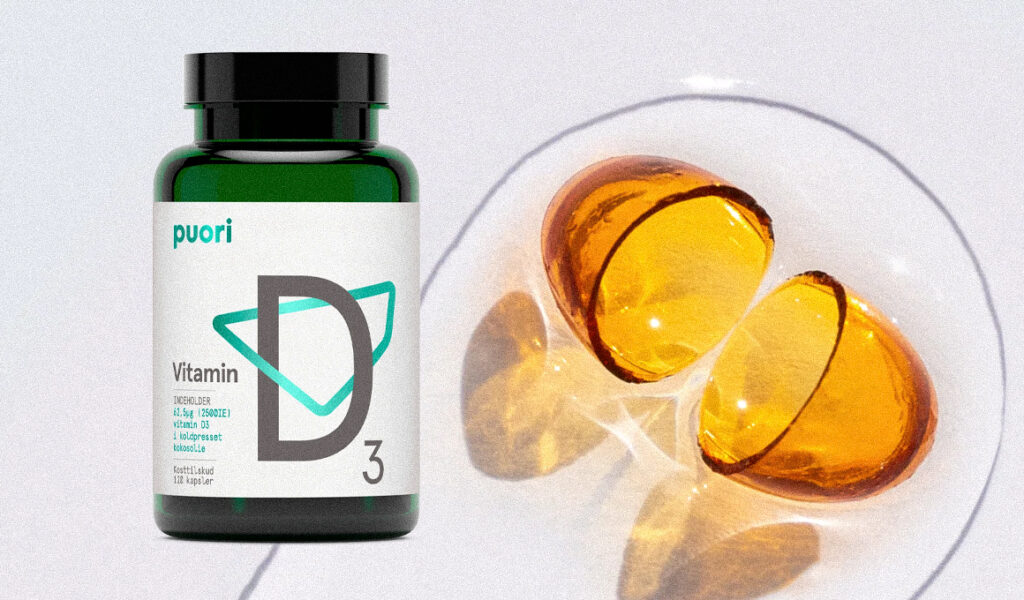
If you’re looking for a supplement that ticks all these boxes, we recommend Puori D3 Vitamin D 2500. It provides a high‑potency, clean source of D3 — ideal for months of limited sun exposure or for anyone who spends much of the day indoors. As part of a broader lifestyle approach, it supports bone strength, immune function, and might help maintain cellular resilience over time.
Of course, no supplement replaces a balanced lifestyle — good sleep, nutritious food, movement, stress‑management. But for those of us at northern latitudes, high‑quality vitamin D is one of the smarter tools we can use to stay healthy.
How to make vitamin D work for you: practical tips
- Test your levels. A simple 25‑hydroxyvitamin D blood test can tell you where you stand.
- Tailor your dose. In darker months (autumn to early spring), many adults may need 1,000–2,000 IU/day to maintain enough vitamin D; some require more — always check with a healthcare professional.
- Pair with healthy habits. A balanced diet (with calcium, magnesium, healthy fats), regular movement (not just gym — walking, outdoor time), and adequate sleep makes supplementation more effective.
- Pick the right type. Prefer D3 — especially during winter — unless you follow a strict vegan diet (in which lichen‑derived D3 is a good compromise).
- Choose quality. Look for brands with transparent labelling, clean ingredients, and preferably third‑party testing.
Vitamin D, it’s a seasonal foundation
For most Scandinavians, the dark half of the year isn’t just about low light — it’s a challenge for our biology. Low vitamin D levels can quietly influence bone health, immune resilience, mood, inflammation — and perhaps even the speed at which our cells age.
But here’s the good news: by choosing the right form of vitamin D, supplementing with quality, and pairing it with a balanced lifestyle — we give our body a foundation to function, adapt, and age more gracefully.
If you live above 55° latitude — as many of us in the Nordics do — a high‑quality vitamin D supplement like Puori D3 – D Vitamin (2500IE) may be one of the best long‑term investments you make for your health.