In nordic countries, eating pasta every day is often seen as a nutritional red flag.
In Italy, it’s simply life.
Despite their steady intake of pasta, pizza, and olive oil, Italians consistently rank among the slimmest and longest-living populations in Europe. According to the OECD, Italy has one of the lowest obesity rates in Western Europe — just 11% of adults, compared to 20% in Denmark and over 30% in the UK and US.
So how is that possible?
Is it the pasta itself that’s different? Is it lifestyle, culture, or metabolism?
The answer, as usual, is a mix of all of the above — but it starts with understanding what we’re actually comparing.
Not all pasta is created same (sadly)
Walk into a regular Scandinavian supermarket and pick up a pack of pasta.
Chances are, it’s made from:
• Standard durum wheat
• Industrially processed flour
• Possibly enriched with synthetic B vitamins or emulsifiers
• Dried quickly at high temperatures for mass production
The result? A fast-cooking product with minimal complexity and a high glycaemic index — meaning it raises blood sugar quickly, especially when overcooked.
Not all pasta is created equal
Walk into a regular Scandinavian supermarket and pick up a pack of pasta. Chances are, it’s made from:
- Standard durum wheat
- Industrially processed flour
- Possibly enriched with synthetic B vitamins or emulsifiers
- Dried quickly at high temperatures for mass production
The result? A fast-cooking product with minimal complexity and a high glycaemic index — meaning it raises blood sugar quickly, especially when overcooked.
In Italy, pasta is different.
Even inexpensive supermarket brands tend to be:
- Made from 100% semolina flour (coarse-ground durum wheat)
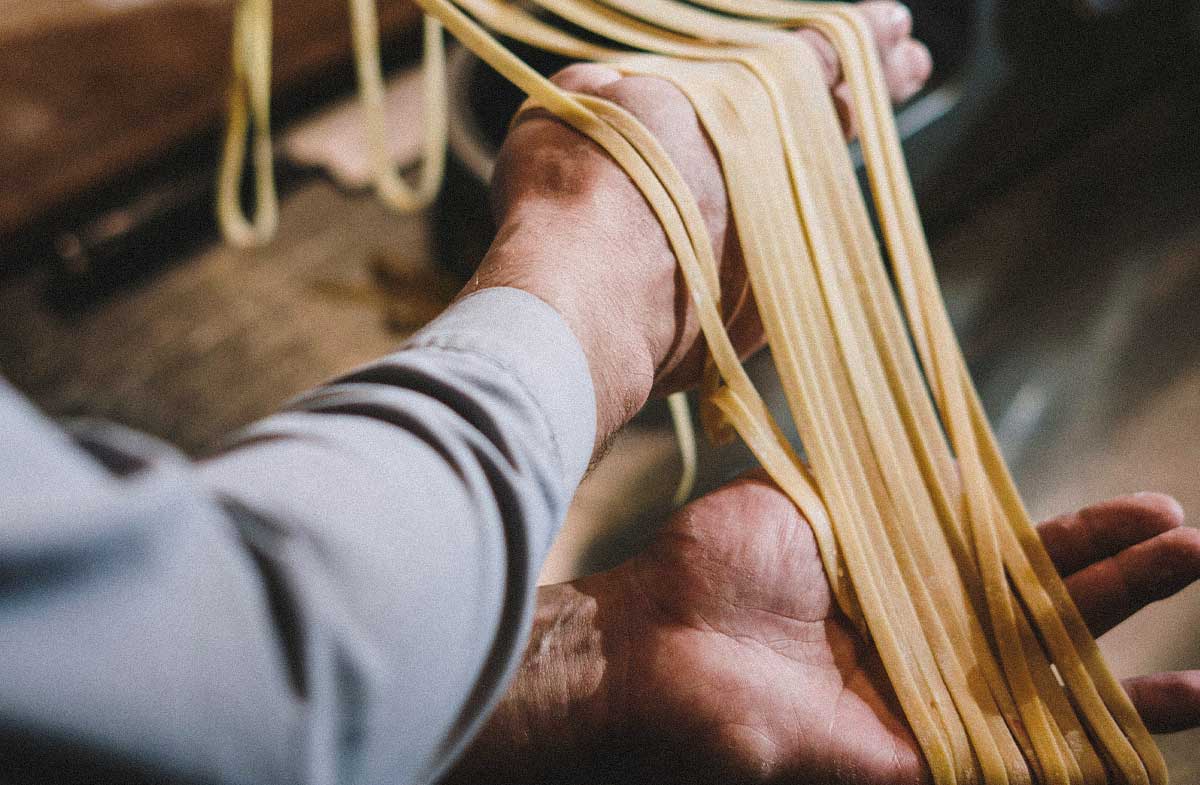
- Bronze-cut, creating a rough surface for sauce to cling to
- Slow-dried at low temperatures — preserving texture and structure
- Produced locally, using wheat grown under strict quality standards
This slow-drying process preserves more resistant starch, which slows digestion and lowers the glycaemic load — meaning Italians can enjoy pasta without spiking blood sugar in the same way we might in the North.
Italians don’t eat pasta like we do
Italians don’t sit down to a 500g bowl of creamy tagliatelle at 20:30 with Netflix on.
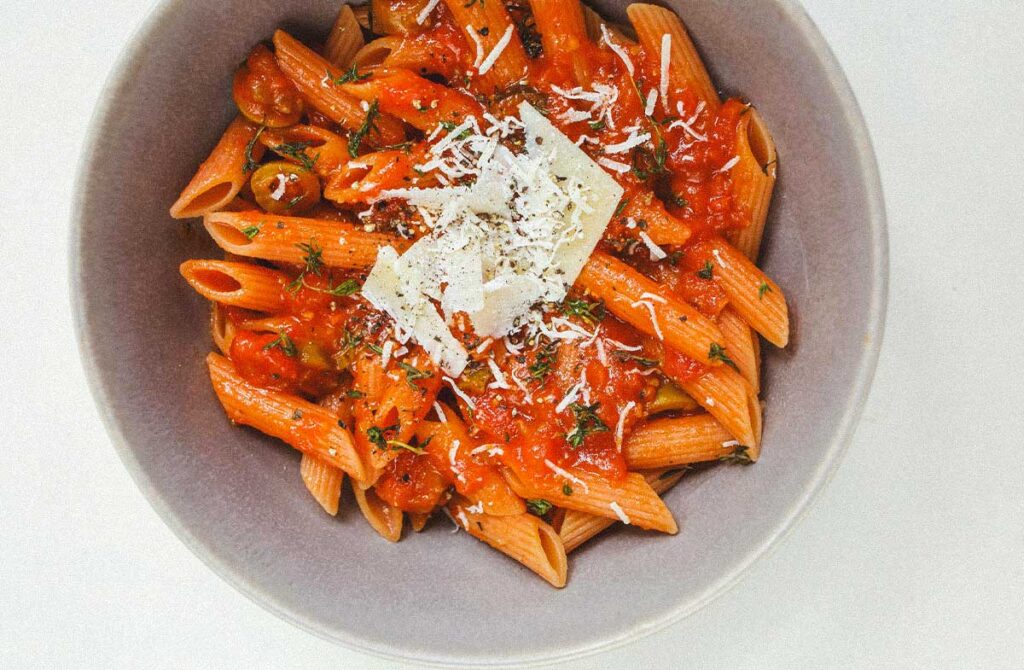
Pasta is traditionally eaten as a first course (primo) — a moderate portion of around 80–100g of dried pasta, often simply dressed with olive oil, tomato, or vegetables. It’s rarely the entire meal.
And it’s almost never drenched in:
• Cream
• Butter-based sauces
• Half a block of cheese
Instead, Italians eat pasta:
• Slowly
• At the table
• Surrounded by vegetables, olive oil, and lean protein
• Often during lunch, followed by a light dinner
Portion control and balance are baked into the culture — even when carbs are on the plate.
It’s not just the food — it’s the lifestyle
Beyond the kitchen, Italians live differently.
A 2023 Eurostat report shows that daily walking and active transport remain far more common in Italy than in most Nordic countries — especially among older generations.
Many Italians walk to buy food, visit family, or run errands. Cars are used less often, especially in historic city centres.
Other lifestyle differences:
• Meals are social rituals, not rushed fuelling
• Snacking is rare
• Desserts are occasional (not habitual)
• Eating out means actual food, not fast food chains
• Home cooking is still the norm, even for students and young adults
Let’s talk data
Several studies help explain this paradox:
• A 2016 study published in Nutrition and Diabetes (doi:10.1038/nutd.2016.18) analysed over 23,000 Italians and found that higher pasta consumption was actually associated with lower BMI and waist circumference — especially when portion sizes were moderate and pasta was part of a balanced Mediterranean diet.
• The Mediterranean Diet — rich in vegetables, olive oil, legumes, and whole grains — remains widely followed in Italy. It has been shown in numerous studies (e.g. NEJM, 2013) to reduce the risk of heart disease, obesity, and type 2 diabetes, even when pasta and bread are included.
• Italians also cook pasta al dente — slightly undercooked — which increases its resistant starch content, making it slower to digest and more stable for blood sugar control.
Our thoughts…
Pasta isn’t the enemy. The context is everything.
Italians aren’t lean and long-lived because of pasta — but also not in spite of it.
They:
• Eat real food
• Honour portion sizes
• Stay active by default
• Value quality over quantity
• Avoid ultra-processed, sugar-heavy products that dominate the Nordic snack culture
If you buy better pasta, cook it properly, eat a little less, and surround it with good olive oil, vegetables and conversation — you can enjoy it, too.