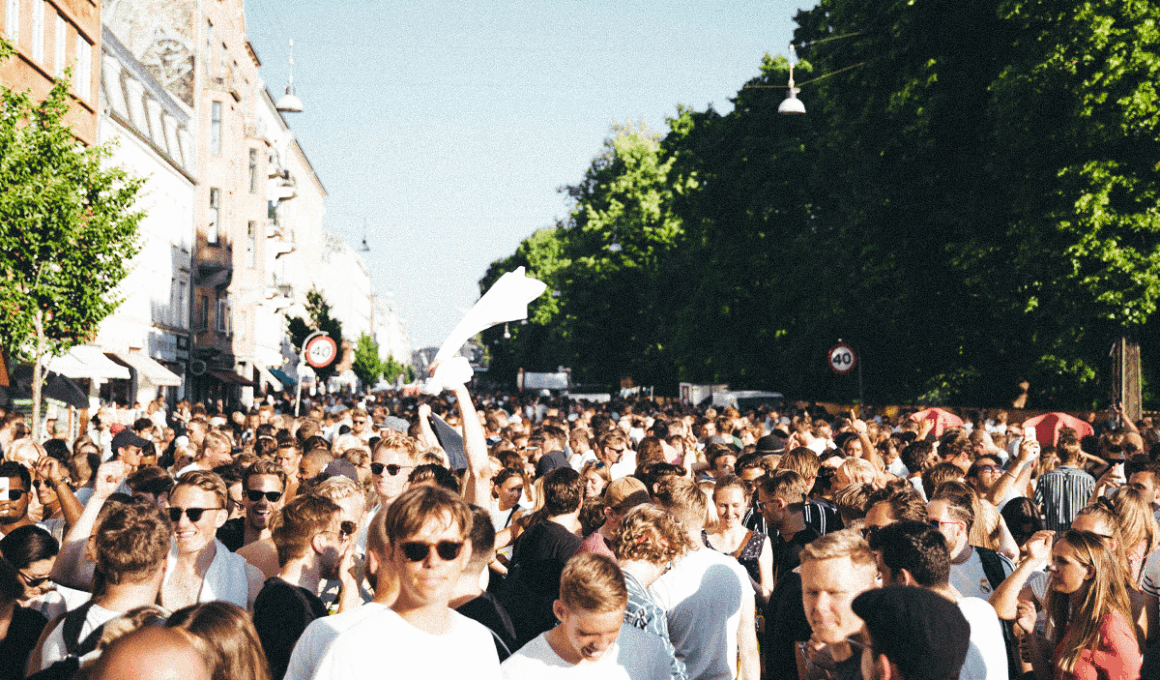
For more than two decades, Copenhagen Distortion has been something uniquely its own. A wild, beautiful, chaotic celebration of street life, club culture, electronic music, and the vibrant soul of the city itself. Born from underground roots in 1998, it quickly grew from an insider’s secret to one of Scandinavia’s most iconic festivals, gathering over 100,000 people a day at its peak.
This year, from 4–8 June 2025, Distortion returns — louder, slicker, and more commercial than ever before.
And while the music, the energy, and the crowds are still there, it is hard to ignore a simple truth: the festival is no longer what it once was.

Adam Port
The line-up: Big names and bigger ambitions
The 2025 programme is stacked. Headliners include some of the most exciting names in electronic and club music right now:
Adam Port, Marlon Hoffstadt, Peggy Gou, Innellea, KI/KI, Kobosil, and many more will set the soundtrack for the week.
The official opening night on 4 June will be hosted at Rådhuspladsen — the heart of Copenhagen — with a massive stage and a high-production setup sponsored by some of Denmark’s biggest brands. Adam Port leads the line-up, alongside Elsked, Fedty, HoneyLuv and TooManyLeftHands.
It is an impressive roster, no doubt. In pure musical terms, Distortion has never felt bigger, or more ambitious.
A festival transformed
But for those who remember the original Distortion, something feels different.
Distortion was once a gift to the city — a democratic, free-for-all celebration where you could dance in the streets with your own drinks in hand, surrounded by strangers who felt like friends. There were no barriers, no VIP sections, no ticket gates. It was messy, unpredictable, and gloriously alive.
In 2025, attending the main party now costs 280 DKK plus a 10 DKK fee — just to enter the Rådhuspladsen area. Drinks are premium priced. Sponsorships are everywhere. Suddenly, the festival that used to belong to the people feels like it belongs to someone else.
The city still buzzes during Distortion Week, of course. Smaller parties and unofficial events will spill into Nørrebro, Vesterbro, and Refshaleøen. But the core experience — the beating heart of Distortion — has shifted. It is now a managed product, not a spontaneous movement.
Commercial success has come at the cost of authenticity.
Distortion’s origins: a celebration of the city
Founded in 1998 by Thomas Fleurquin and dancehall icon Andy Fresh, Distortion was never meant to be a “festival” in the traditional sense. It was a celebration of Copenhagen’s nightlife, street culture, and creative spirit — where the city’s hidden corners became dancefloors, and every local could be part of it.
By 2011, Distortion had exploded into a phenomenon, with more than 80,000–100,000 people flooding the streets daily.
In 2014, it reached new heights, with huge gatherings at Sankt Hans Torv, Enghave Plads, and Latinerkvarteret, all managed with surprisingly little trouble. Even when the festival flirted with chaos, it was the good kind — the kind that made you proud to be part of it.
Even during the pandemic years of 2020 and 2021, when the street parties were cancelled, the spirit of Distortion remained alive. Small, local celebrations persisted in quieter forms, waiting for the day the festival could return to its full glory.
Now, in 2025, it has returned. But it is not quite the same.
A farewell to the old Distortion spirit?
Nobody can blame the organisers for wanting to grow. Distortion’s budget, logistics, and security requirements today are nothing like they were in the early 2000s. The city has changed, the stakes have changed, and expectations have changed.
Large sponsors and ticket sales are, in many ways, the only way a festival of this size can survive.
But for many of us, something intangible has been lost.
The rough edges, the sense of ownership, the feeling that this was ours — not a show we had to pay to enter, but a spontaneous celebration we created together.
Today’s Distortion is impressive, world-class, and polished.
But it no longer feels like Copenhagen’s secret playground. It feels like Copenhagen’s ticketed event.
The bright side
It is not all gloom.
The music is better than ever. The production values are world-class. Distortion remains a crucial platform for artists and a powerful showcase for Copenhagen’s culture and energy.
If you have never been before, Distortion 2025 will still be an unforgettable experience — just a different kind of unforgettable.
And if you are willing to pay the price, you will dance under the summer sky to some of the best electronic music artists in the world, surrounded by thousands of others doing exactly the same.